
In this post, we’re going to walk through how to match paint with furniture so your space feels cohesive, stylish, comfortable — and totally you. No jargon. Just fun, practical advice for people who love home décor and want results.
Why matching paint and furniture matters
Imagine you’ve got a gorgeous sofa and armchair — but the wall color fights with them. The room feels “off,” even if every piece is beautiful. That’s because coordinating your wall paint to your furniture (and vice versa) brings harmony.
Interior experts talk about starting with the furniture when choosing paint (rather than the other way around). Lighting, undertones, finishes — they all affect how your furniture and paint will look together. So yeah… it matters.
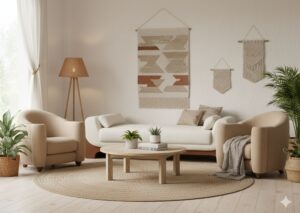
The foundation – assess your furniture and undertones
Before grabbing a paint can, take stock of what you already have. Let’s break it down.
Look at your dominant furniture pieces
Ask yourself:
What’s the biggest piece in the room? Sofa? Dining table?
What color and material is it? Warm wood? Cool metal?
What tones are you seeing (red-leaning, yellow-leaning, blue-leaning)?
For instance, a dark wood table with reddish undertones needs a paint color with warm undertones, so you don’t create visual tension. As interior designers note: matching undertones is key.
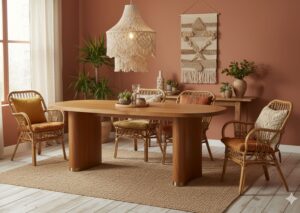
Check your lighting & wall context
Rooms with tons of natural light handle darker or richer wall colors. Rooms that feel a bit shaded? You might lean lighter. Also, walls bounce color onto furniture and vice versa — so test samples.
A smart move: tape a paint chip on the wall beside your major furniture piece and observe it at different times of day.
How to choose wall paint shades that complement your furniture
Now for the juicy how-to. Let’s go step by step.
1. Choose your approach: blend or contrast
You basically have two strong directions:
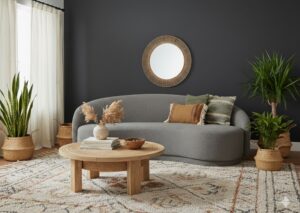
Blend / tone-on-tone: Pick a paint that’s in the same color family as your furniture, maybe slightly lighter or darker. This creates a calm, unified look. For example: a medium grey sofa + soft charcoal wall.
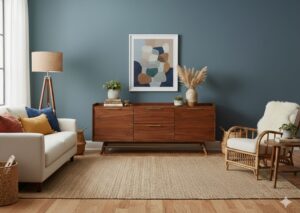
Contrast: Use a wall paint that differs in tone or shade from your furniture to make furniture “pop.” For example: warm wood furniture + cool slate-blue wall. Designers say contrast adds depth.
Use the 60-30-10 rule for room balance
This classic interior design rule helps maintain harmony:
60% dominant color = usually your wall paint.
30% secondary color = your furniture + large décor pieces.
10% accent color = pillows, small décor, maybe trim.
So if you pick a wall paint that’s your dominant color, make sure your furniture (30%) and décor (10%) are playing along.
Use neutrals smartly
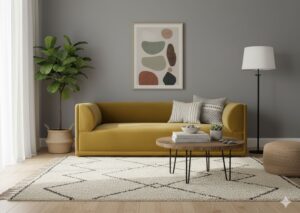
If your furniture is bold and colorful (like teal, mustard, patterned), consider letting the walls step back with neutral paint (soft whites, greys, taupes). Then use furniture to shine. This keeps the focus balanced.
Accent walls & statement furniture
Sometimes you want to make a statement. What you can do:
- Paint one wall in a richer, stronger paint shade behind your major furniture piece.
- Leave the rest of the walls in a softer coordinating shade.
- Use your furniture’s color story as inspiration for the accent wall.
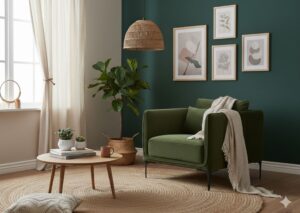
Example: if your armchair has deep forest-green upholstery, a dark green accent wall behind it creates drama; keep other walls neutral.
Practical tips
- Get quality sample pots — Paint swatches on paper can mislead. Buy small sample sizes of your top 2-3 shades, paint large swatches on the walls near your furniture, and observe them at morning, afternoon, evening.
- Coordinate finishes — Paint isn’t just about color; finish matters. A gloss wall will reflect differently than a matte one. If your furniture is glossy, maybe go for wall paint with a soft matte so your furniture retains its shine.
- Don’t ignore furniture accessories — A side table, lamp base, or rug can shift the vibe. Match your paint with more than just the sofa. Good example: If your decor has brass/gold metal accents, pick a wall color that complements warm metallics (warm greys, muted taupes). According to experts: “bluish greys work with bold furniture” and white walls open up possibilities.
Your step-by-step mini-guide to getting started
Here’s a quick checklist you can follow:
- Survey the room: major furniture pieces, flooring, lighting, decor accents.
- Pick your dominant furniture piece (sofa, table, wardrobe). Note its color and undertone.
- Choose 2-3 wall paint color options that either blend or contrast with your furniture.
- Buy sample pots. Paint large patches on two walls (one behind furniture, one opposite).
- Observe at different times of day under real lighting.
- Choose the finish and finalize paint.
- Once walls are painted, adjust accessories (pillows, rugs, artwork) to integrate furniture and paint colors.
- Step back, live in the space for a week, tweak if needed (a pillow, throw, small accent wall).
FAQs
Q1: Can I pick a wall paint color first and then buy furniture to match?
Yes—but with caution. If you pick walls first, you limit your furniture choices to pieces that match those wall tones. That might work if you’re furnishing from scratch. But if you already own furniture, it’s easier to let that furniture guide the wall color. According to design blogs, starting with the furniture avoids mismatch issues. So if you’re starting fresh: sure, paint first works. But make sure you’re comfortable buying furniture within the paint’s color story.
Q2: What if I have multiple furniture colors in the same room (e.g., wood, metal, upholstery)? How do I match paint then?
- Identify the dominant furniture color or material (usually the largest or most visible piece).
- Look for common undertones across the different materials (warm vs cool).
- Choose a wall paint shade that works with the dominant piece + complements the undertones.
- Use accessories (pillows, throws, small décor) to pull together the less dominant materials.
For instance: if you have a walnut-wood table (warm), a grey metal side chair (cool) and a mustard sofa (warm), you might lean warm (since two major pieces are warm) and pick a warm greige or muted terracotta wall paint. Then use a cool accent pillow or throw to nod to the metal chair.
Q3: What finish should I pick for wall paint when matching furniture?
- The finish matters as much as the shade. Here’s a quick guide:
- Matte / Flat: hides wall imperfections, works well in cozy spaces, but reflects less light.
- Eggshell / Satin: slight sheen, easy to clean, good all-purpose for living rooms.
- Semi-Gloss / Gloss: high sheen, reflects more, good for trims or furniture-adjacent walls.