
Ever stared at a blank wall and thought, “Something’s missing…”?
Yeah, we’ve all been there. Wall art is the secret ingredient that turns a simple room into a stylish statement. But here’s the real question — how do designers make it look so effortlessly perfect?
In today’s guide, we’re walking you through how to hang wall art like a pro designer. Whether it’s a single statement piece or a curated gallery wall, we’ll show you how to balance color, texture, and space to make your home feel warm, intentional, and oh-so-stylish.
Step 1: Begin with the Mood, Not the Hammer
Before you pick a spot, decide what kind of energy you want your wall to give off.
Boho decor is emotional — each piece should tell a story.
If you love soft, coastal calm, go for gentle, neutral artwork like “The Beach House” piece. Its minimalist beige tones and serene composition instantly set a peaceful mood, perfect for a bedroom or living space filled with natural light and linen textures.
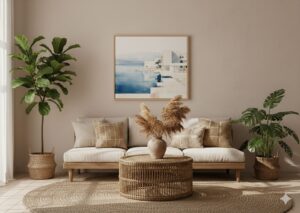
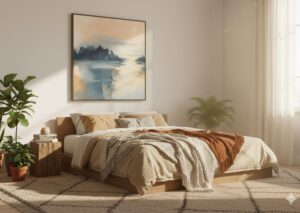
On the other hand, if your style leans warm and earthy, try something like “Golden Hour Gaze” The rich, golden hues of this oil painting bring warmth and depth.
Designer Tip: Always start with the feeling you want the room to give, then choose art that mirrors that emotion
Step 2: Placement Is About Connection
Hanging art isn’t about rules — it’s about relationships between the pieces and the space around them.
Designers usually center wall art 57–60 inches from the floor, but the magic is in adjusting it to the room’s rhythm. For example, if you’re hanging a large piece like the “Garden of Life”, align its center closer to your furniture line so it feels visually connected to the room instead of floating too high.
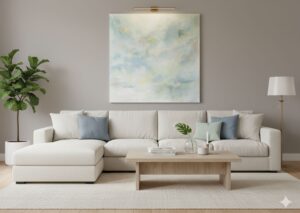
If you’re styling a gallery wall, place the main piece slightly off-center, then build around it. Smaller works like this “Abstract Coastal Landscape” can fill the gaps naturally, adding softness and variation.
Pro Tip: Step back after each adjustment. Designers rely on visual balance, if it feels right, it usually is.
Step 3: Create a Conversation Between Pieces
Great walls feel like a dialogue — each artwork complements the others without competing.
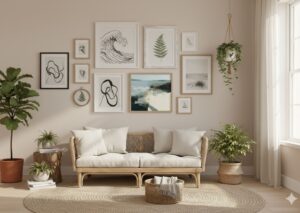
Start with one main “mood-setter” piece and add supporting art that echoes its tone. For instance, the “Calm Sea Art” pairs beautifully with neutral prints and woven textures. Its fluid brushstrokes bring calm movement, making it ideal for pairing with simpler line drawings or botanical sketches.
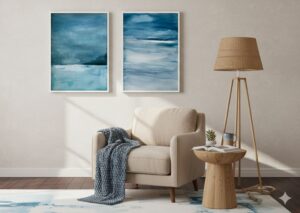
If your base art is more dynamic — like the “Garden of Life”, with its rich contrast and depth — balance it by placing minimal, airy art nearby. The mix of energy and calmness is what makes bohemian interiors feel alive.
Stylist Tip: Keep a shared element — whether it’s color, frame finish, or theme — running through the collection to create harmony.
Step 4: Light It Like a Gallery
Designers treat lighting as part of the art itself.
A piece with gold or reflective tones (like “Golden Hour Gaze”) glows best under a soft, warm spotlight, especially during evening hours.
For calm, watercolor-based works (like “Calm Sea Art” or “Abstract Coastal Landscape”), use diffused daylight or a neutral lamp. It enhances the transparency and texture of the paint without glare.
Avoid harsh overhead lights — they flatten your art’s colors. Instead, use wall sconces or lamps angled slightly upward for that designer-level, gallery feel.
Bonus Tip: If possible, hang your art where it catches morning light. Boho spaces thrive on natural brightness and the soft glow of golden-hour shadows
Step 5: Tell Your Story — Not Pinterest’s
Every great wall tells a personal story.
Mix your favorite finds, maybe an abstract art next to a family photo or a handmade macramé.
The key is authenticity. Designers curate art that reflects personality, not just trends. So don’t overthink, choose pieces that make you feel something.
Boho decor thrives on imperfection and warmth. If your wall feels soulful and intentional, you’ve done it right
FAQs
Q1: How high should I hang my wall art?
Designers usually aim for the artwork’s center to sit around 57 inches from the floor, but adjust to fit your furniture’s height. Over a sofa, leave about 6–8 inches of space — close enough to feel connected, not floating.
Q2: Can I mix different art styles on one wall?
Definitely! The boho look thrives on contrast. Blend abstract pieces with photography or line art, but keep one visual thread — color, tone, or frame material — to maintain cohesion.
Q3: What’s the best lighting for wall art?
Soft, warm lighting enhances depth and color without glare. For textured or metallic art, angled spotlights work wonders. For watercolor or minimalist pieces, daylight or neutral lamps keep things fresh and natural.
Q4: How do I choose the right frame?
Match the frame to your room’s mood. Light wood frames complement airy, coastal styles; black or brass frames emphasize drama. The goal is harmony — not distraction.